Nutrition
15 Common Nutrition Myths You Should Stop Believing
- By
- NHHA Editorial
- Published
- Reading time
- 20 min
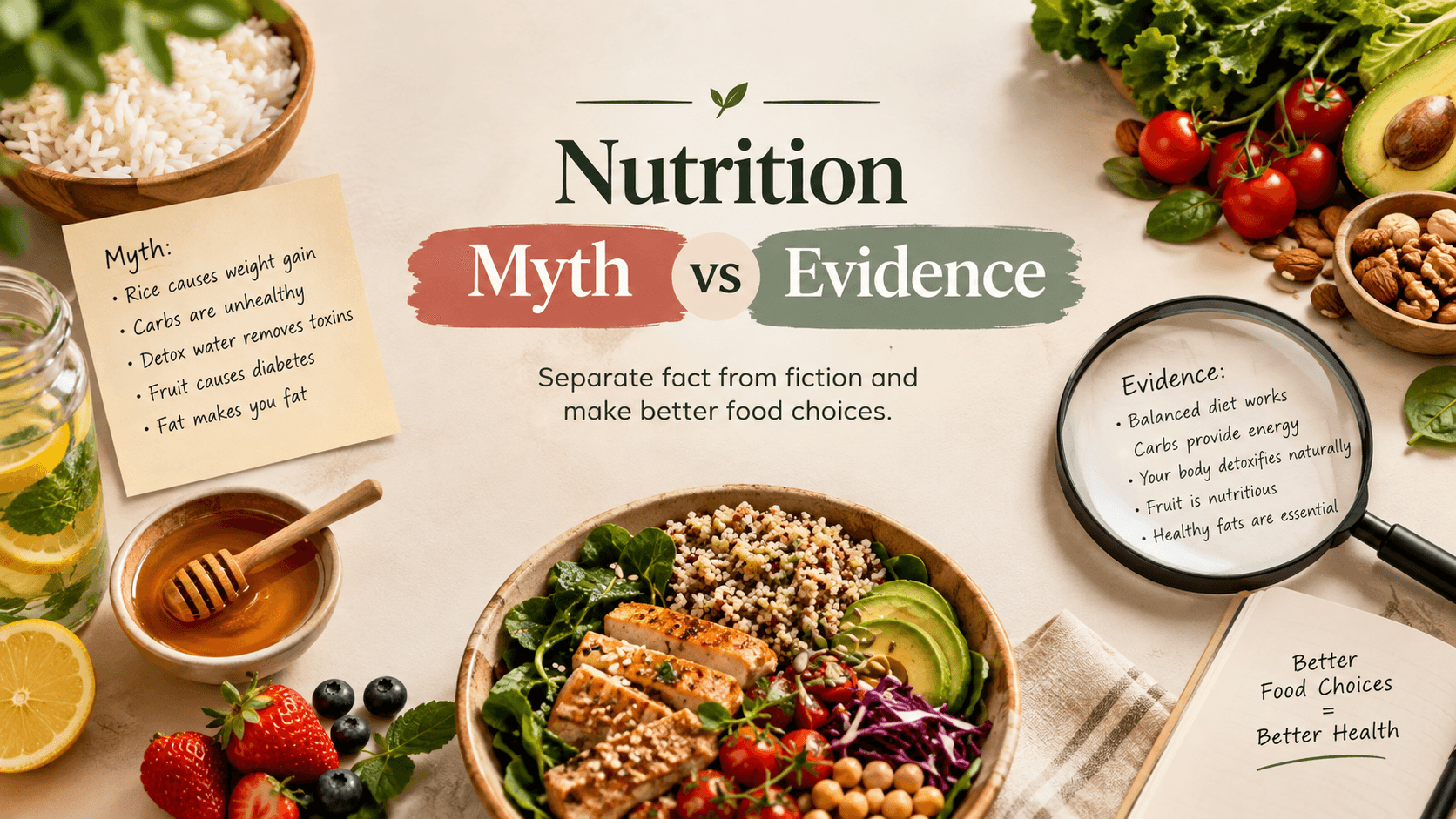
Is rice bad? Are carbs the enemy? Does detox water remove toxins? Explore common nutrition claims and what the evidence actually suggests.
15 Common Nutrition Myths You Should Stop Believing
Introduction
Nutrition advice is everywhere. From social media reels and celebrity diet plans to advice from friends and family, people are constantly exposed to claims about what they should eat, avoid, or change to improve their health. While some recommendations are supported by scientific evidence, others are based on outdated information, misunderstandings, or exaggerated marketing claims.
In India, food-related myths are particularly common because dietary habits are closely connected to culture, family traditions, and regional preferences. Rice is often blamed for weight gain, carbohydrates are labelled unhealthy, and certain drinks are promoted as solutions for detoxification and rapid fat loss. These claims can make healthy eating seem unnecessarily complicated.
The truth is that nutrition is not about following extreme restrictions or eliminating entire food groups. A balanced diet depends on overall eating patterns, portion sizes, food quality, physical activity, individual health conditions, and consistency over time.
Understanding the difference between nutrition myths and evidence-based recommendations can help you make better food choices without unnecessary fear or confusion. Let's explore 15 common nutrition myths and what the available evidence actually suggests.
1. Myth: Eating Rice Makes You Gain Weight
What people believe
Rice is a staple food in many Indian households, but it is frequently blamed for weight gain. Some people believe that eliminating rice completely is necessary to lose weight, while others replace it with supposedly healthier alternatives without considering their overall dietary intake.
What evidence suggests
Rice is a source of carbohydrates that provides energy for the body. Like other foods, rice contributes calories, but eating rice does not automatically cause weight gain. Weight changes are influenced by overall energy intake, energy expenditure, physical activity, sleep, and other individual factors.
The type of rice, preparation method, portion size, and accompanying foods also matter. A large serving of rice combined with calorie-dense gravies and fried foods may contribute more energy than intended. On the other hand, a moderate portion of rice served with dal, vegetables, curd, and a protein source can fit comfortably into a balanced diet.
Brown rice contains more fiber than polished white rice, but white rice can also be included in a healthy eating pattern.
Practical takeaway
You do not need to eliminate rice to manage your weight. Pay attention to portion sizes and combine rice with vegetables, protein-rich foods, and other nutritious ingredients. Choose the variety that suits your preferences, budget, and health needs.
2. Myth: Carbohydrates Are Bad for Your Health
What people believe
Carbohydrates are often treated as the enemy of weight loss. Popular diet trends encourage people to avoid rice, roti, potatoes, bread, and other carbohydrate-containing foods because they are believed to cause fat accumulation.
What evidence suggests
Carbohydrates are an important source of energy, particularly for the brain and muscles during physical activity. The effect of carbohydrates on health depends on their sources, quantity, and the overall quality of the diet.
Whole grains, fruits, vegetables, legumes, and other fibre-rich carbohydrate sources provide important nutrients. In contrast, diets high in sugary drinks, sweets, and heavily refined snack foods may provide excess calories while offering relatively little fiber.
People with diabetes or certain other health conditions may benefit from individualized carbohydrate management, but that does not mean everyone needs to avoid carbohydrates.
Practical takeaway
Focus on carbohydrate quality rather than eliminating carbohydrates altogether. Include foods such as whole-wheat roti, oats, millets, beans, lentils, fruits, and vegetables according to your dietary needs. A sustainable diet should provide adequate energy and nutrients.
3. Myth: Skipping Meals Is the Best Way to Lose Weight
What people believe
Some people believe that missing breakfast or lunch automatically reduces body fat because fewer meals mean fewer calories. Others skip meals to compensate for eating more than planned the previous day.
What evidence suggests
Weight management depends largely on overall energy balance and long-term eating patterns, not simply on the number of meals eaten. Some people find that structured meal timing or intermittent fasting suits their routines, while others experience fatigue, headaches, difficulty concentrating, or excessive hunger.
Skipping meals can also lead some individuals to overeat later in the day. For others, it may not have this effect. Individual responses vary, and skipping meals is not necessary for successful weight management.
People who are pregnant, have a history of eating disorders, use glucose-lowering medication, or have certain medical conditions should seek appropriate professional advice before attempting fasting or restrictive eating patterns.
Practical takeaway
Choose a meal schedule that supports your energy, hunger, daily routine, and health needs. Instead of skipping meals as punishment for eating more, focus on balanced meals and consistent habits.
4. Myth: Detox Water Removes Toxins From the Body
What people believe
Lemon water, cucumber water, fruit-infused water, and special detox drinks are often promoted as products that flush toxins, cleanse internal organs, and accelerate fat loss.
What evidence suggests
The body already has systems that process and eliminate waste products. The liver helps metabolize substances, while the kidneys filter blood and remove waste through urine. The digestive system, lungs, and skin also have important physiological functions.
Drinking enough water supports normal bodily functions, and adding lemon or cucumber can improve flavor and make hydration more enjoyable. However, there is limited evidence that special detox drinks remove toxins more effectively than the body's normal processes in healthy people.
Rapid changes in body weight after restrictive detox programme may reflect water loss or changes in food intake rather than meaningful fat loss.
Practical takeaway
Drink water regularly and include a variety of nutritious foods in your diet. You can enjoy infused water if you like the taste, but avoid expensive detox products or extreme cleansing programme that promise unrealistic results.
5. Myth: Eating Fat Makes You Fat
What people believe
Fat contains more calories per gram than carbohydrates or protein, so many people assume that all dietary fat should be avoided when trying to lose weight.
What evidence suggests
Dietary fat plays several essential roles. It helps the body absorb vitamins A, D, E, and K, supports cell function, and provides essential fatty acids. The type of fat consumed is important for overall health.
Unsaturated fats found in nuts, seeds, peanuts, and many vegetable oils can be part of a balanced diet. Excessive intake of saturated fats may increase LDL cholesterol in some dietary contexts, while industrial trans fats are particularly harmful to cardiovascular health.
Although fat is energy-dense, completely eliminating it can make a diet less nutritious and harder to sustain. Weight management still depends on overall energy intake and lifestyle patterns.
Practical takeaway
Include appropriate amounts of healthy fat from foods such as nuts, seeds, and suitable cooking oils. Be mindful of portions because fats are calorie-dense, and limit foods high in industrial trans fats and excessive saturated fat.
6. Myth: Brown Sugar and Honey Are Always Healthier Than White Sugar
What people believe
Brown sugar, honey, jaggery, and other natural sweeteners are often considered healthy alternatives to white sugar. Some people assume they can consume these products freely because they are less processed or come from natural sources.
What evidence suggests
Honey, jaggery, brown sugar, and white sugar differ in composition and processing, but they all contribute sugars and calories. Some less-refined sweeteners contain small quantities of minerals, yet these amounts generally do not make them nutritionally equivalent to whole foods.
Consuming excessive amounts of added or free sugars can make it harder to maintain a balanced diet and may contribute to dental problems and excess energy intake.
The word "natural" does not automatically mean a food is healthier when consumed in large quantities.
Practical takeaway
You can choose the sweetener you prefer, but keep the overall amount moderate. Reduce frequent consumption of sugary drinks, desserts, and heavily sweetened packaged foods rather than relying on a different sweetener to solve the problem.
7. Myth: Eating Fruit Causes Diabetes
What people believe
Because fruits contain natural sugars, some people avoid mangoes, bananas, grapes, and other sweet fruits because they fear that eating them will cause diabetes or raise blood sugar dangerously.
What evidence suggests
Whole fruits contain water, fiber, vitamins, minerals, and beneficial plant compounds. Their nutritional composition differs from that of many sugary drinks and sweets.
Diabetes develops through a combination of factors, including genetics, body composition, physical activity, age, and other health influences. Eating whole fruit as part of a balanced diet does not automatically cause diabetes.
However, people who already have diabetes may need to consider fruit portions, overall carbohydrate intake, medication, and their individual blood glucose responses. Fruit juice also differs from whole fruit because it generally provides less fiber per serving and can be consumed more quickly.
Practical takeaway
Include a variety of whole fruits in your diet. If you have diabetes, work with a qualified healthcare professional or dietitian to determine suitable portions and meal combinations instead of unnecessarily eliminating fruit.
8. Myth: Eating After 7 PM Automatically Causes Weight Gain
What people believe
Many weight-loss plans impose strict rules against eating after a particular time, often claiming that food consumed at night is automatically stored as fat.
What evidence suggests
The body does not stop using energy when the clock reaches 7 PM. Weight changes are influenced by overall calorie intake, activity, sleep, and long-term dietary patterns.
However, meal timing may affect appetite, digestion, sleep quality, and metabolic responses. Eating very large meals close to bedtime may cause discomfort or worsen reflux in some individuals. Late-night snacking can also increase daily energy intake when it becomes an additional habit rather than a replacement for another meal.
People working night shifts or following different schedules may need different meal timings.
Practical takeaway
Focus on what you eat, how much you eat, and how your meal schedule affects your sleep and comfort. If late-night eating regularly involves highly processed snacks, try planning satisfying meals and snacks earlier in your day.
9. Myth: Fruit Must Always Be Eaten on an Empty Stomach
What people believe
A popular nutrition claim suggests that eating fruit after meals causes it to ferment in the stomach, reduces nutrient absorption, or prevents the body from receiving its benefits.
What evidence suggests
In healthy people, the digestive system can process fruit eaten on its own or alongside other foods. The stomach and intestines use digestive processes to break down meals and absorb nutrients.
Eating fruit with a meal does not generally make it harmful. In fact, pairing fruit with foods containing protein, fiber, or fat may help some people feel satisfied for longer.
Some individuals may experience bloating or discomfort after particular fruits because of digestive sensitivities. These reactions are individual and do not mean fruit must always be eaten separately.
Practical takeaway
Eat fruit at a time that suits your appetite, routine, and digestion. You can enjoy it as a snack, alongside breakfast, or as part of a meal. Focus on eating enough fruit rather than following unnecessary timing restrictions.
10. Myth: High-Protein Diets Are Only for Bodybuilders
What people believe
Protein supplements and high-protein meals are often associated exclusively with gym-goers, athletes, and bodybuilders. As a result, people with less active lifestyles may overlook protein in their daily diets.
What evidence suggests
Protein is required for muscle maintenance, tissue repair, the production of enzymes and hormones, and several other essential functions. Protein needs vary depending on age, body size, activity level, health status, and individual goals.
Many everyday Indian foods provide protein, including dal, chickpeas, kidney beans, milk, curd, paneer, soy products, eggs, fish, and poultry.
Protein powders are not essential for everyone. They may be convenient in certain situations, but whole foods can provide protein alongside other important nutrients.
People with chronic kidney disease or certain medical conditions may require individualized protein recommendations.
Practical takeaway
Include a suitable protein source in your main meals. Choose from plant-based or animal-based foods according to your preferences and needs. Rather than focusing only on supplements, build a balanced diet that supplies adequate protein throughout the day.
11. Myth: Carbohydrates Should Never Be Eaten With Protein
What people believe
Some food-combining diets claim that carbohydrates and proteins require incompatible digestive processes. They recommend eating these nutrients separately to improve digestion, burn fat, or prevent weight gain.
What evidence suggests
The human digestive system is designed to process mixed meals. Many traditional Indian dishes naturally combine carbohydrates, protein, fats, and fiber.
For example, dal with rice, rajma with roti, and idli with sambar provide combinations of nutrients that can contribute to a balanced meal. Eating different food groups together does not automatically interfere with digestion or cause fat accumulation.
The nutritional value of a meal depends more on its ingredients, portions, overall balance, and suitability for the individual than on strict food-combining rules.
Practical takeaway
Build meals that combine suitable carbohydrate sources, protein-rich foods, vegetables, and healthy fats. There is no general need to separate carbohydrates and proteins unless a specific medical or personal dietary requirement calls for it.
12. Myth: Gluten-Free Food Is Healthier for Everyone
What people believe
Gluten-free diets are frequently promoted as a healthier way to eat, lose weight, improve digestion, or reduce inflammation. Some people assume that avoiding gluten is beneficial even when they have no diagnosed condition related to it.
What evidence suggests
Gluten is a protein found in wheat, barley, and rye. People with coeliac disease must avoid gluten because it triggers an immune response that damages the small intestine. Some individuals with wheat allergy or other diagnosed sensitivities also need specific dietary modifications.
However, gluten is not inherently harmful to everyone. Many whole-grain foods containing gluten provide fiber, vitamins, minerals, and other beneficial nutrients.
Packaged gluten-free products are not automatically lower in sugar, calories, or saturated fat. Some may also contain less fiber than their whole-grain alternatives.
Practical takeaway
Follow a gluten-free diet when it is medically indicated or recommended for your individual needs. Otherwise, focus on the overall quality of your food choices, including suitable whole grains, rather than avoiding gluten simply because it is a popular trend.
13. Myth: Eating Less Is Always Better for Weight Loss
What people believe
Some people assume that the smaller the amount of food they eat, the faster they will lose weight. This belief can lead to extreme calorie restriction, skipping meals, and avoiding nutritious foods.
What evidence suggests
Weight management may involve an energy deficit, but excessively restricting food can make it difficult to obtain sufficient protein, vitamins, minerals, essential fats, and other nutrients.
Very restrictive diets can also contribute to fatigue, persistent hunger, reduced exercise performance, and difficulties maintaining progress. In some circumstances, inadequate energy intake can affect hormonal function and muscle mass.
A successful weight-management approach should account for nutritional adequacy, personal preferences, physical activity, and long-term sustainability.
Practical takeaway
Aim for a balanced, appropriately portioned diet rather than eating as little as possible. Include vegetables, protein-rich foods, suitable carbohydrate sources, fruits, and healthy fats. If weight management is your goal, a qualified dietitian can help you develop a realistic plan.
14. Myth: Supplements Can Replace a Healthy Diet
What people believe
Multivitamins, protein powders, herbal products, and other supplements are often marketed as shortcuts to better health. Some people assume that taking supplements can compensate for poor eating habits.
What evidence suggests
Supplements can be useful when a nutrient deficiency exists, when requirements are increased, or when particular dietary or medical circumstances make it difficult to meet nutritional needs through food alone.
For example, vitamin B12 supplementation may be important for many people following vegan diets, while other supplements may be recommended during specific life stages or for diagnosed deficiencies.
However, supplements do not reproduce the full nutritional benefits of a varied diet. Whole foods provide combinations of nutrients, fiber, and plant compounds that cannot always be replicated in a capsule or powder.
Some supplements may also interact with medications or cause harm when taken in excessive amounts.
Practical takeaway
Treat supplements as targeted tools rather than replacements for balanced meals. Seek professional advice when supplementation is necessary, and avoid products that promise rapid fat loss, complete detoxification, or guaranteed health improvements.
15. Myth: You Need to Completely Eliminate Your Favorite Foods to Be Healthy
What people believe
Many diet plans divide foods into strict categories of "good" and "bad." People may feel that they must permanently give up sweets, pizza, biryani, traditional snacks, or other favorite foods to maintain a healthy lifestyle.
What evidence suggests
Overall dietary patterns matter more than a single food or occasional meal. A diet that includes a variety of nutritious foods can still accommodate favorite foods in appropriate portions.
Rigid food rules can make eating stressful and difficult to sustain. Some individuals may also experience cycles of strict restriction followed by overeating when their diet feels too limiting.
This does not mean that every food has the same nutritional value. Foods rich in fiber, protein, vitamins, and minerals should form the foundation of a balanced eating pattern, while foods high in added sugars, sodium, or saturated fat are generally best consumed in moderation.
Practical takeaway
Build a flexible eating routine that prioritises nutritious foods without requiring perfection. Enjoy your favorite dishes in suitable portions and return to your usual balanced eating pattern at the next meal. Consistency is more valuable than following unrealistic restrictions.
How to Identify Nutrition Myths in Everyday Life
With so much nutrition information available online, learning to evaluate health claims is an important skill. Before changing your diet because of a social media post or a trending recommendation, consider the following questions.
1. Does the claim promise instant results?
Statements such as "lose 5 kg in a week," "melt belly fat overnight," or "remove all toxins in three days" should be approached with caution. Meaningful health changes usually require an appropriate, consistent approach.
2. Does it ask you to eliminate an entire food group?
Some medical conditions require specific dietary restrictions. However, recommendations to eliminate all carbohydrates, all fats, or entire groups of nutritious foods are not suitable for everyone.
3. Is the recommendation supported by credible evidence?
Look for information from qualified healthcare professionals, registered dietitians, recognised public health organizations, and peer-reviewed research. A celebrity endorsement or personal success story is not sufficient proof that a diet works for everyone.
4. Is the advice suitable for your individual needs?
Age, activity level, pregnancy, medical conditions, medications, cultural food preferences, and nutritional deficiencies can influence dietary requirements. A recommendation that works for one person may not be appropriate for another.
5. Is someone selling a product through fear?
Be cautious when a post claims that ordinary foods are dangerous and then promotes a supplement, detox drink, or expensive programme as the only solution. Consider whether the evidence supports the claim independently of the product being sold.
What Does Evidence-Based Healthy Eating Look Like?
Instead of following every new diet trend, focus on a few practical habits that can support long-term health.
- Eat a variety of foods: Include different vegetables, fruits, whole grains, pulses, and suitable protein sources.
- Pay attention to portions: Choose quantities that match your hunger, activity level, and individual health needs.
- Include adequate protein: Incorporate dal, beans, curd, paneer, soy, eggs, fish, poultry, or other suitable sources.
- Choose fiber-rich foods: Whole grains, legumes, vegetables, and whole fruits can help support digestive health and fullness.
- Stay hydrated: Drink water regularly and adjust intake according to your activity, climate, and health requirements.
- Limit excessive added sugar and highly processed foods: Focus on the frequency and quantity of these foods rather than relying on fear-based restrictions.
- Maintain regular physical activity: Combine movement you enjoy with appropriate strength-building activities where suitable.
- Priorities sleep and consistency: Adequate sleep and sustainable daily routines can support appetite regulation and general well-being.
Healthy eating does not require expensive superfoods or complicated meal plans. Everyday Indian foods can provide a nutritious foundation when meals are varied, balanced, and appropriate for individual needs.
Conclusion
Nutrition myths can make healthy eating confusing by presenting ordinary foods as dangerous and extreme dietary restrictions as necessary. Rice does not automatically cause weight gain, carbohydrates are not inherently unhealthy, and detox water cannot replace the body's normal waste-removal systems. Similarly, fruit, dietary fats, and gluten-containing foods should not be automatically avoided by everyone.
The most useful approach is to understand the overall quality of your diet, recognise your individual nutritional needs, and make changes that you can maintain over time.
Rather than following every viral diet trend, ask questions, examine the evidence, and seek guidance from qualified nutrition professionals when necessary. A balanced eating pattern, regular physical activity, adequate sleep, and consistent habits provide a more reliable foundation for health than quick fixes or unnecessary food restrictions.
Remember: There is no single perfect diet for everyone. The goal is to make informed food choices that support your health, fit your lifestyle, and remain sustainable in the long term.
Disclaimer: This article is intended for general educational purposes and does not replace individualized medical or nutritional advice. People with medical conditions or specific dietary requirements should consult a qualified healthcare professional or registered dietitian before making significant dietary changes.
Frequently Asked Questions (FAQs)
1. What are the most common nutrition myths?
Common nutrition myths include the belief that rice causes weight gain, all carbohydrates are unhealthy, detox water removes toxins, fruit causes diabetes, and eating after 7 PM automatically leads to fat gain. These claims overlook the importance of overall dietary patterns, portion sizes, and individual health needs.
2. Are carbohydrates necessary for a healthy diet?
Carbohydrates provide energy and can supply fibre, vitamins, and minerals. Whole grains, fruits, vegetables, and legumes are useful sources. The appropriate amount depends on individual needs, but most people do not need to eliminate carbohydrates entirely.
3. Can I eat rice while trying to lose weight?
Yes. Rice can be included in a weight-management plan. Pay attention to portions, overall energy intake, and the foods served alongside it. Combining rice with vegetables and protein-rich foods can help create a balanced meal.
4. Does detox water remove toxins from the body?
There is limited evidence that detox water removes toxins beyond the body's normal physiological processes. Drinking water supports hydration, but the liver and kidneys perform essential roles in processing and eliminating waste.
5. Is fruit safe for people with diabetes?
Whole fruit can generally be included in a diabetes-friendly eating pattern. Appropriate portions and meal planning may be important, depending on individual glucose responses and treatment. A qualified dietitian or healthcare professional can help personalize recommendations.
6. Should I completely stop eating sugar to stay healthy?
Completely eliminating every source of sugar is not necessary for everyone. However, limiting excessive added and free sugars, especially from sugary drinks and frequently consumed sweets, can support a healthier dietary pattern. Whole fruits contain naturally occurring sugars alongside fiber and other nutrients.
7. How can I tell whether nutrition advice is reliable?
Check whether the claim is supported by credible scientific evidence, whether it comes from a qualified source, and whether it acknowledges individual differences. Be cautious of dramatic promises, fear-based messaging, and advice that promotes unnecessary restrictions or unproven products.
8. Who should I consult for personalized nutrition advice?
A qualified dietitian or appropriately trained healthcare professional can help you develop a plan based on your nutritional requirements, medical history, food preferences, lifestyle, and health goals. Personalized advice is particularly important for people with chronic conditions or specific nutritional needs.
Enroll now and book your seat
https://learn.nhha.in/nutration-lp/
Filed under
- nutrition myths
- food myths
- healthy eating
- diet myths
- nutrition facts