Nutrition
20 Nutrition Questions People Ask Google Every Day
- By
- NHHA Editorial
- Published
- Reading time
- 18 min
From protein and calories to carbs, breakfast and weight management, answer common nutrition questions in one easy-to-read guide.
Understanding Nutrition: Answers to Your Everyday Food Questions
Nutrition plays an important role in how we feel, move, think, and function throughout the day. The food we eat provides energy, supports growth and repair, maintains normal body functions, and supplies essential vitamins and minerals. However, with so much nutrition advice available online, it can be difficult to understand which recommendations are useful and which are based on myths.
Some people want to know how much protein they need, while others are confused about carbohydrates, calories, meal timing, or the best diet for weight management. Many also wonder whether breakfast is necessary, whether eating rice causes weight gain, and how much water they should drink daily.
The truth is that good nutrition does not require complicated rules or expensive foods. Understanding a few basic principles can help you make more informed choices that suit your lifestyle, food preferences, and health needs.
In this guide, we answer 20 common nutrition questions using simple explanations and practical examples to help you develop healthier eating habits.
1. What Is Nutrition, and Why Is It Important?
Nutrition is the process through which the body obtains and uses nutrients from food to maintain normal functions, produce energy, grow, and repair tissues. These nutrients include carbohydrates, proteins, fats, vitamins, minerals, and water.
Each nutrient serves a different purpose. Carbohydrates and fats provide energy, proteins help build and repair tissues, and vitamins and minerals support processes such as immunity, bone health, and metabolism. Water helps regulate body temperature and transport nutrients.
A balanced diet provides these nutrients in appropriate amounts. For example, a meal containing roti, dal, vegetables, curd, and a source of healthy fat can provide a combination of energy, protein, fibre, and micronutrients.
Practical tip: Focus on variety, balance, and consistency instead of relying on a single food or supplement to meet all your nutritional needs.
2. How Much Protein Do You Need Every Day?
Protein is essential for muscle maintenance, tissue repair, enzyme production, and several other body functions. Your daily protein requirement depends on factors such as body weight, age, activity level, health status, and personal goals.
For many healthy adults, a commonly used baseline reference is approximately 0.8 grams of protein per kilogram of body weight per day. People who exercise regularly, older adults, and those with certain health needs may require different amounts.
For example, a healthy adult weighing 60 kg would need approximately 48 grams of protein daily using this baseline reference. This is a general estimate, not a personalised target.
Indian protein sources include dal, chickpeas, rajma, soybeans, tofu, paneer, milk, curd, eggs, fish, and chicken. Combining different protein sources throughout the day can help you meet your needs.
Practical tip: Include a protein-rich food in your main meals rather than trying to consume most of your protein at dinner.
3. Which Indian Foods Are High in Protein?
You do not need to depend entirely on protein powders or imported foods to increase your protein intake. Many familiar Indian foods contain useful amounts of protein.
Vegetarian options include soy chunks, tofu, paneer, lentils, chickpeas, kidney beans, milk, curd, and other dairy products. Non-vegetarian options include eggs, fish, chicken, and lean meats.
The amount of protein varies according to portion size and preparation method. For example, soy chunks are a concentrated protein source when measured dry, while cooked dal provides protein alongside carbohydrates and fibre.
A simple day could include besan chilla at breakfast, dal and curd at lunch, roasted chana as a snack, and tofu or chicken with vegetables at dinner.
Practical tip: Choose protein sources that fit your budget, preferences, and usual meals. Consistency matters more than following a complicated meal plan.
4. What Are Calories, and Why Do They Matter?
Calories are units of energy that indicate how much energy food and drinks provide to the body. Your body uses this energy for breathing, circulation, digestion, movement, and other essential functions.
Foods differ in their calorie content. Nuts, oils, and seeds are energy-dense, while many fruits and vegetables provide fewer calories per typical serving and contain water, fibre, and micronutrients.
Calories matter because energy intake and energy expenditure influence body weight over time. However, calorie intake alone does not tell you whether a diet is nutritionally balanced. Two meals with similar calories can differ considerably in protein, fibre, vitamins, minerals, and overall nutritional value.
Practical tip: Consider both the quantity and quality of your food. A balanced diet should provide sufficient energy as well as the nutrients your body needs.
5. How Many Calories Should You Eat in a Day?
There is no single calorie target suitable for everyone. Daily energy requirements depend on age, sex, body size, activity level, health status, and individual goals.
Someone with a physically demanding job may need more energy than someone who spends most of the day sitting. Growing adolescents, pregnant individuals, and people recovering from illness may also have different nutritional requirements.
Online calorie calculators can provide rough estimates, but they cannot account for every individual factor. Calorie needs may also change as activity levels, body weight, and health circumstances change.
If your goal is weight management, an appropriate approach should support energy needs, adequate nutrient intake, and long-term sustainability rather than extreme restriction.
Practical tip: Avoid copying another person's calorie target. If you have a medical condition, a history of disordered eating, or specific nutritional requirements, seek individual guidance from a qualified healthcare professional.
6. Are Carbohydrates Bad for Your Health?
No. Carbohydrates are an important source of energy, particularly for the brain and muscles. The type of carbohydrate and the overall quality of your diet are more important than simply avoiding carbohydrates.
Whole grains, fruits, vegetables, legumes, and dairy foods can all contribute carbohydrates alongside other beneficial nutrients. Whole grains and legumes often provide fibre, which supports digestive health and can help with fullness.
Foods high in added sugar, such as sugary drinks and many sweets, are different from fibre-rich carbohydrate foods. Frequently consuming large amounts of added sugar may make it harder to maintain a balanced diet.
Rice, roti, oats, potatoes, and millets can all fit into healthy eating patterns when portions and overall meals suit your needs.
Practical tip: Instead of eliminating carbohydrates, prioritise minimally processed sources, combine them with protein and vegetables, and pay attention to portion sizes.
7. Is Rice Healthy, or Does It Cause Weight Gain?
Rice can be part of a balanced diet. It provides carbohydrates for energy and is a staple food in many Indian households. White rice and brown rice differ in their fibre and nutrient content, but neither automatically causes weight gain.
Weight changes are influenced by overall energy intake, physical activity, sleep, health factors, and eating patterns over time. The amount of rice you eat and what you serve with it can affect the nutritional balance of your meal.
For example, rice paired with dal, vegetables, curd, and a suitable protein source can make a balanced meal. Eating rice alongside a variety of foods can also help you obtain a wider range of nutrients.
Brown rice generally contains more fibre than white rice, although the best choice depends on personal preference, tolerance, availability, and health needs.
Practical tip: You do not have to give up rice to eat healthily. Focus on balanced portions and nutritious accompaniments.
8. Should You Eat Breakfast Every Day?
Breakfast can help provide energy and nutrients after the overnight period without food. For some people, eating breakfast improves morning concentration, helps manage hunger, and makes it easier to maintain a regular eating routine.
However, breakfast needs vary between individuals. Research does not establish that everyone must eat breakfast at a particular time to remain healthy. Overall diet quality and adequate nutrient intake across the day matter considerably.
If you feel hungry in the morning, a nutritious breakfast may be helpful. Options include vegetable poha with curd, idli with sambar, oats with milk and nuts, eggs with whole-grain toast, or besan chilla.
Skipping breakfast is not automatically harmful for every adult, but repeatedly missing meals and then becoming excessively hungry may make balanced eating more difficult for some people.
Practical tip: Choose an eating schedule that suits your appetite, daily routine, nutritional needs, and health conditions.
9. What Is a Balanced Diet?
A balanced diet provides the energy and nutrients your body needs through a variety of foods in appropriate amounts. It includes a combination of carbohydrates, protein, healthy fats, vitamins, minerals, fibre, and water.
A practical Indian meal may include vegetables, a grain such as roti or rice, a protein source such as dal, beans, paneer, eggs, or fish, and curd or another suitable food depending on your preferences.
Fruits, nuts, seeds, and other nutrient-rich foods can add variety throughout the day. No single food needs to provide every nutrient, and a balanced diet does not have to look identical for everyone.
Dietary needs can differ because of age, activity level, pregnancy, medical conditions, cultural preferences, and food availability.
Practical tip: Try to include a variety of food groups across your meals. Consistently eating a diverse range of nutritious foods is more useful than searching for one perfect meal.
10. How Much Water Should You Drink Daily?
Water is essential for regulating body temperature, transporting nutrients, supporting digestion, and maintaining normal body functions. Your fluid requirements depend on factors such as activity level, climate, body size, diet, and health status.
People living in hot climates or exercising heavily may need more fluids because they lose additional water through sweating. Water-rich foods such as fruits, vegetables, soups, and curd also contribute to fluid intake.
There is no universal amount that suits everyone. Thirst and the colour of your urine can offer useful everyday clues, although these are not perfect measures in every situation. Certain medical conditions may require specific fluid guidance.
Drinking excessive amounts of water in a short period can also be harmful, so forcing yourself to consume very large quantities is not necessary.
Practical tip: Keep water accessible during the day and drink regularly, particularly during hot weather and physical activity. Follow medical advice if you have been given fluid restrictions.
11. What Is Dietary Fibre, and Why Do You Need It?
Dietary fibre is found in plant foods and supports digestive health. Certain types of fibre help maintain regular bowel movements, while others can support fullness, healthy cholesterol levels, and blood glucose management.
Good sources include whole grains, oats, beans, lentils, chickpeas, fruits, vegetables, nuts, and seeds. A varied diet containing these foods can help you increase fibre intake naturally.
Increasing fibre too quickly may cause bloating or gas, especially if your usual diet contains very little fibre. Drinking adequate fluids can also help support normal bowel function.
For example, replacing some refined-grain foods with whole grains and adding fruit, vegetables, or legumes to meals can gradually increase fibre intake.
Practical tip: Increase fibre gradually and choose a variety of plant foods rather than relying on one high-fibre product.
12. Are Fats Necessary for Good Health?
Yes. Dietary fats are essential for several body functions, including hormone production, cell structure, and the absorption of fat-soluble vitamins A, D, E, and K.
The type of fat you consume matters. Unsaturated fats, found in foods such as nuts, seeds, fish, and certain plant oils, are generally preferred over diets high in saturated and trans fats.
Ghee, butter, coconut products, nuts, and oils can all contribute fat, but they differ in their fatty acid composition. Ghee and butter can be included in suitable amounts, while repeatedly consuming foods containing industrial trans fats should be avoided.
Fat is also energy-dense, so portions can influence the total energy content of a meal.
Practical tip: Include appropriate amounts of unsaturated fat sources and use cooking oils mindfully. You do not need to eliminate all fats to follow a healthy diet.
13. Can You Lose Weight Without Following a Strict Diet?
Yes. Weight management does not necessarily require a highly restrictive diet, skipping meals, or eliminating entire food groups. For many adults, gradual and sustainable changes are easier to maintain than short-term rules.
Helpful habits may include eating regular balanced meals, including protein and fibre-rich foods, reducing frequent consumption of sugary drinks, monitoring portion sizes, getting sufficient sleep, and staying physically active.
Foods that you enjoy can still fit into an overall healthy eating pattern. Strict rules may be difficult to maintain and can contribute to cycles of restriction and overeating for some individuals.
Weight management is also influenced by medications, genetics, hormonal factors, stress, medical conditions, and other circumstances that cannot be addressed by diet alone.
Practical tip: Focus on small changes you can maintain over time. If you need to lose weight for health reasons, a qualified dietitian can help you choose an appropriate and realistic approach.
14. Is Eating Late at Night Bad for You?
Eating late at night is not automatically harmful, and a meal does not cause weight gain simply because it is eaten after a particular hour. Overall food intake, meal composition, sleep patterns, and daily routines all matter.
However, large or heavy meals close to bedtime may cause discomfort or worsen acid reflux in some people. Late-night snacking may also increase overall energy intake if it becomes a frequent response to boredom, stress, or disrupted routines.
People working night shifts may need different meal schedules from those following a conventional daytime routine.
Practical tip: If late meals disturb your sleep or digestion, try eating your main meal earlier and choosing a lighter snack when needed. Allow enough time between a large meal and lying down, especially if you experience reflux.
15. Which Foods Help Support a Healthy Immune System?
The immune system depends on many nutrients, including protein, vitamins A, C, D, and E, zinc, iron, and other micronutrients. No single food can prevent every infection or instantly strengthen immunity.
A varied diet can help provide these nutrients. Examples include citrus fruits, guava, amla, vegetables, pulses, nuts, seeds, dairy foods, eggs, fish, and other protein-rich foods.
Adequate sleep, physical activity, vaccination where appropriate, hygiene, and management of underlying health conditions also contribute to overall health.
Taking high-dose vitamin or mineral supplements without a demonstrated need is not necessarily beneficial and can sometimes be harmful.
Practical tip: Build a varied diet instead of relying on one so-called immunity-boosting food or drink. Seek medical advice if you suspect a nutritional deficiency.
16. Do You Need Supplements if You Eat a Healthy Diet?
Not everyone needs dietary supplements. Many people can meet most of their nutritional requirements through a varied and balanced diet, but some individuals may benefit from specific supplements.
Supplement needs depend on factors such as dietary restrictions, confirmed deficiencies, life stage, medical conditions, medication use, and the body's ability to absorb nutrients.
For example, vitamin B12 supplementation may be important for people following vegan diets if their diet does not provide a reliable source. Iron or vitamin D supplementation may be recommended in certain circumstances following appropriate assessment.
Supplements are not automatically safe simply because they are sold without a prescription. Some interact with medicines, and excessive doses can cause harm.
Practical tip: Discuss supplements with a qualified healthcare professional when you have a suspected deficiency or a specific nutritional need. Avoid taking multiple products with overlapping ingredients without checking their contents.
17. What Is the Difference Between Whole Foods and Processed Foods?
Whole foods are foods that are close to their natural form, such as fresh fruit, vegetables, legumes, eggs, and minimally processed grains. Processed foods have undergone some form of preparation or modification, such as cooking, freezing, fermenting, or packaging.
Processing is not automatically unhealthy. Frozen vegetables, plain curd, canned beans, and pasteurised milk can all be useful parts of a nutritious diet.
The distinction between processing and nutritional quality is important. Some highly processed products contain substantial amounts of sodium, added sugar, or saturated fat, while others may provide useful nutrients and convenience.
For example, plain oats and packaged sweetened cereal may differ considerably in sugar content and fibre, even though both are breakfast products.
Practical tip: Read ingredient lists and nutrition labels, compare similar products, and choose options that support your overall dietary needs. You do not need to avoid every packaged food.
18. How Can You Reduce Sugar Intake Without Giving Up All Sweets?
Reducing excessive added sugar can support a healthier overall eating pattern without requiring you to eliminate every sweet food. Added sugar is commonly found in soft drinks, sweetened tea and coffee, desserts, packaged snacks, breakfast cereals, and some sauces.
Start by identifying the sources that contribute most to your intake. For example, gradually reducing the sugar added to tea or replacing sugary drinks with water can make a meaningful difference over time.
Whole fruits contain naturally occurring sugars along with fibre, water, and other nutrients. They are not nutritionally equivalent to sugary drinks or sweets.
You can still enjoy desserts occasionally while paying attention to portions and the frequency of consumption.
Practical tip: Make gradual changes that suit your preferences. Check food labels for added sugar and remember that ingredients such as syrups can also contribute to total sugar intake.
19. What Should You Eat Before and After Exercise?
Food choices around exercise can influence energy levels, comfort, and recovery. The best approach depends on the duration and intensity of your activity, your goals, and how much time you have to eat.
Before exercise, some people benefit from easily digested carbohydrate-rich foods, such as a banana, toast, or a small serving of oats. A large meal immediately before vigorous exercise may cause discomfort.
After exercise, a meal or snack containing protein and carbohydrates can help support muscle repair and replenish energy stores. Options include curd with fruit, milk and a banana, eggs with toast, dal with rice, or a tofu-based meal.
Hydration is also important, particularly during prolonged exercise or in hot conditions. Most people doing shorter, moderate workouts can meet their needs with regular meals and water.
Practical tip: Prioritise sufficient daily nutrition and hydration rather than depending on expensive pre-workout or recovery products.
20. How Can You Build Healthy Eating Habits That Last?
Healthy eating is most effective when it becomes part of your everyday routine rather than a short-term challenge. A sustainable approach considers your schedule, budget, food preferences, culture, and nutritional requirements.
Begin with manageable changes. You might add a serving of vegetables to lunch, include a protein source at breakfast, keep fruit available for snacks, or prepare a few meals in advance.
Planning meals can reduce last-minute food decisions, while learning basic cooking methods can help you control ingredients and portion sizes. Eating mindfully and paying attention to hunger and fullness can also help you understand your habits.
Avoid expecting perfection. An occasional meal that differs from your usual routine does not undo your progress. Consistency over time is more important than following every nutrition rule perfectly.
Practical tip: Choose two or three habits to work on first. Once they become easier to maintain, introduce additional changes gradually.
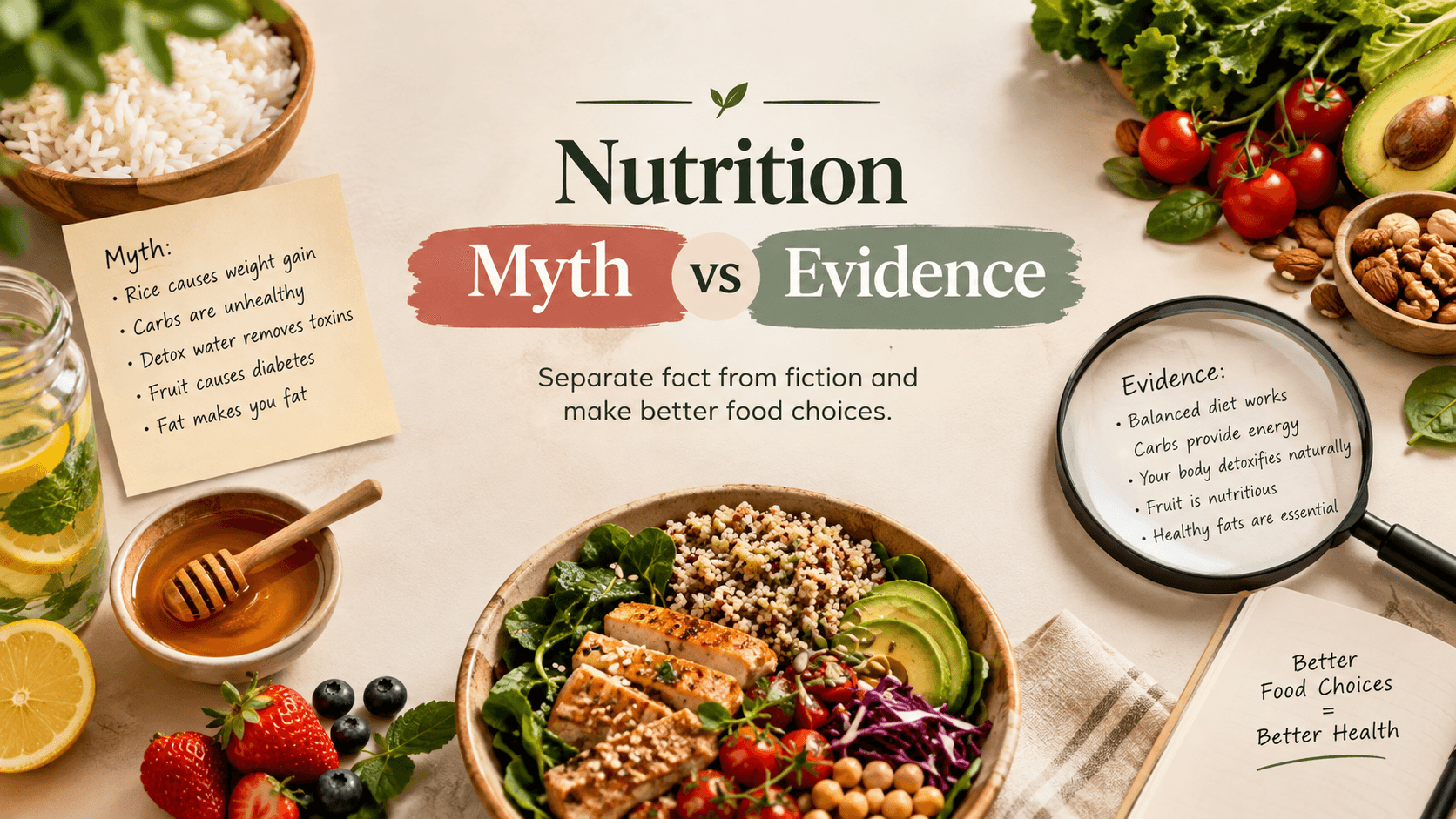
Common Nutrition Myths You Should Know About
Nutrition misinformation can make healthy eating seem more complicated than it needs to be. Here are a few important reminders:
- Myth: Carbohydrates always cause weight gain.
- Fact: Carbohydrates provide energy. Weight changes depend on several factors, including overall energy intake and expenditure.
- Myth: You must completely avoid rice to lose weight.
- Fact: Rice can fit into a balanced diet when portions and overall food choices suit your needs.
- Myth: All fats are unhealthy.
- Fact: Dietary fats are essential. The type and amount of fat matter.
- Myth: Supplements can replace a balanced diet.
- Fact: Supplements may address specific needs, but they cannot replace the full range of nutrients and benefits provided by a varied diet.
- Myth: One food can detoxify your body.
- Fact: Your liver and kidneys perform essential waste-processing and excretion functions. No special drink or food can replace their normal functions.
Understanding these differences can help you evaluate nutrition advice more critically and avoid unnecessary dietary restrictions.
How to Make Better Nutrition Decisions
With so much advice available online, it helps to use a few simple principles when evaluating nutrition information.
Look for credible sources: Prefer evidence-based information from qualified healthcare professionals, recognised health organisations, and reliable scientific resources.
Be cautious about dramatic claims: Promises of rapid weight loss, instant detoxification, or guaranteed results from one food or supplement deserve careful scrutiny.
Consider your individual needs: A diet that works for one person may not be suitable for someone with a different health condition, activity level, age, or nutritional requirement.
Focus on overall patterns: One meal, ingredient, or nutrient rarely determines the quality of your entire diet. Consider what you eat consistently over days and weeks.
Seek personalised guidance when needed: If you have a medical condition, persistent digestive symptoms, suspected nutrient deficiencies, or specific dietary requirements, consult an appropriately qualified healthcare professional.
Final Thoughts
Nutrition does not have to be confusing. Understanding the basics of protein, calories, carbohydrates, dietary fats, fibre, hydration, and balanced meals can help you make informed decisions about your everyday food choices.
The 20 questions in this guide highlight an important principle: there is no single perfect diet for everyone. Healthy eating depends on variety, appropriate portions, adequate nutrients, and habits that fit your life.
Rather than following every new diet trend, start with simple steps. Include different food groups, choose nutrient-rich foods regularly, drink adequate fluids, stay active, and make gradual changes you can maintain.
For those who want to understand nutrition more deeply, learning about nutrients, meal planning, food labels, and evidence-based dietary practices can provide a useful foundation for personal health and further study.
Disclaimer: This article is intended for general educational purposes and is not a substitute for individual medical or dietary advice. Nutritional requirements vary between individuals. Consult a qualified healthcare professional or registered dietitian for personalised guidance, particularly if you have a medical condition or specific nutritional needs.
Explore now and book your seats
Filed under
- nutrition questions
- nutrition FAQ
- healthy eating
- diet questions
- nutrition basics