Nutrition
Effortless Meal Prepping: Managing Indian Diets for Busy Schedules & Diabetes
- By
- NHHA Editorial
- Published
- Reading time
- 7 min
Master time-saving Indian meal prep strategies for home health or build an online consulting service as a meal planner.
Effortless Meal Prepping: Managing Indian Diets for Busy Schedules & Diabetes
Simplify Healthy Eating Without Complicating Your Routine
For many Indian households, eating healthy sounds easier than actually doing it. Busy mornings, long working hours, family responsibilities, last-minute meals, and frequent eating outside can make consistent meal planning difficult.
For people managing diabetes, weight, or other nutrition goals, this becomes even more important. The answer, however, doesn't have to be a complicated diet or a completely different way of eating.
Smart meal preparation can make traditional Indian food more balanced, convenient, and easier to manage.
Whether you're a homemaker preparing meals for the family, a corporate professional trying to eat better during a busy workday, or someone looking to improve everyday nutrition, a simple meal-prep system can help you stay consistent.
Why Meal Prep Matters for Busy Indian Lifestyles
One of the biggest challenges with healthy eating isn't always knowing what to eat. It's having the right food available when you're hungry.
When meals aren't planned, people often end up:
- Skipping breakfast because of a busy morning
- Ordering food during work hours
- Eating larger portions than intended
- Depending heavily on packaged snacks
- Choosing refined carbohydrates for convenience
- Eating dinner very late
- Repeating the same meals without considering nutritional balance
Meal preparation helps remove some of these daily decisions.
Instead of asking "What should I cook today?" every few hours, you can prepare key ingredients in advance and assemble balanced meals throughout the week.
Building a Balanced Indian Thali
A healthy Indian meal doesn't need to eliminate rice, roti, or traditional foods. The focus should be on balance, portion awareness, variety, and overall meal composition.
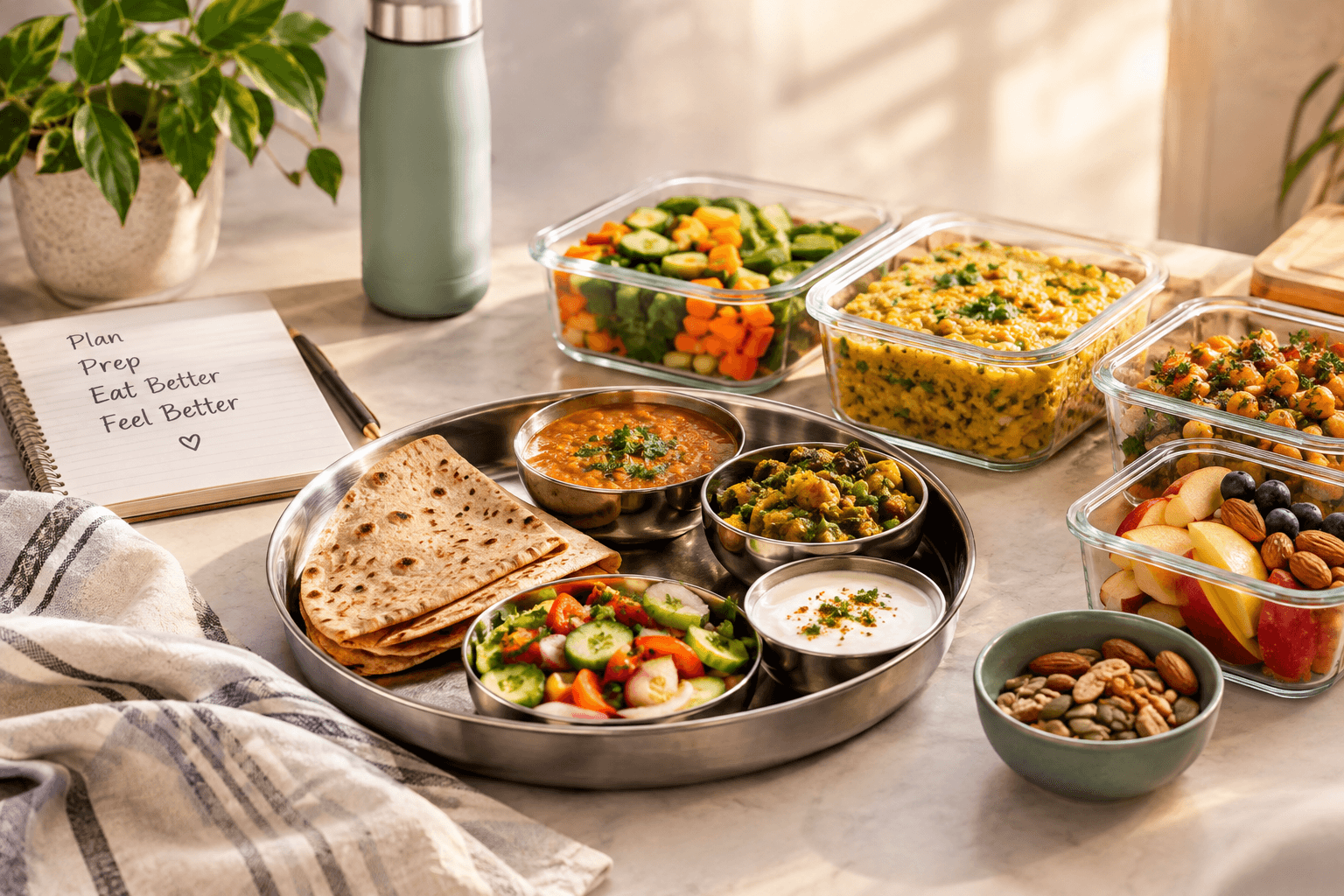
A practical Indian thali can include:
1. Vegetables
Include cooked vegetables, leafy greens, salads, or other non-starchy vegetables. They add fibre, vitamins, minerals, and volume to the meal.
2. Protein
Protein can come from options such as dal, beans, chana, rajma, paneer, curd, eggs, fish, chicken, or other suitable sources.
Including protein can make meals more satisfying and help create a more balanced plate.
3. Carbohydrates
Rice, roti, bhakri, poha, upma, idli, dosa, and other traditional carbohydrate sources can still fit into a balanced diet.
Rather than completely avoiding carbohydrates, consider portion size, food quality, preparation method, and what you eat alongside them.
4. Healthy Fats
Nuts, seeds and appropriate amounts of cooking oils can contribute healthy fats to the diet. The key is moderation, since fats are energy-dense.
5. Curd or Other Suitable Dairy Options
Depending on individual dietary needs, unsweetened curd or other suitable dairy options can complement a meal.
The exact combination and portion sizes should be personalized according to an individual's health status, nutritional requirements, medications, and goals.
Meal Prep Strategies for Busy Professionals
For someone working a 9-to-6 job, preparing every meal from scratch every day may not be realistic.
Instead, focus on component-based meal preparation.
For example, you can prepare some ingredients in advance:
Protein:
Boiled eggs, cooked dal, sprouts, paneer, grilled chicken or fish.
Vegetables:
Wash and chop vegetables ahead of time or prepare a batch of cooked vegetables.
Carbohydrates:
Keep suitable grains or flour ready so meals can be assembled quickly.
Healthy snacks:
Portion nuts, seeds, fruit, roasted chana, or other appropriate options in advance.
This doesn't mean eating the same meal every day. The same prepared ingredients can be combined differently throughout the week.
Meal Prep for Diabetes Management
For people living with diabetes, meal planning requires additional attention.
Rather than focusing only on eliminating sugar, it's important to consider the overall carbohydrate content, portion sizes, meal composition, fibre, and individual response to foods.
A meal containing carbohydrates alongside protein, fibre-rich foods, and appropriate portions may be more balanced than consuming a large portion of refined carbohydrates alone.
For example, instead of making a meal primarily around a large serving of rice, you could build the plate around vegetables and protein while keeping the carbohydrate portion appropriate for your individual needs.
However, diabetes management is highly individual. Medication, activity levels, blood glucose patterns, and other health factors can influence dietary requirements. People with diabetes should follow personalized advice from their healthcare and nutrition professionals rather than adopting a generic diet from the internet.
Understanding Glycemic Load
You may have heard about the glycemic index (GI), but another useful concept is glycemic load (GL).
GI describes how quickly a carbohydrate-containing food can raise blood glucose compared with a reference food. Glycemic load also takes the amount of carbohydrate consumed into account.
This highlights an important point:
The portion you eat matters.
A food shouldn't automatically be labelled as "good" or "bad" based only on its GI. The overall meal, portion size, preparation, and individual health requirements all matter.
This is one reason why personalized nutrition guidance can be more useful than simply following a generic "diabetes-friendly foods" list.
A Simple Weekly Meal-Prep Framework
You don't need to spend your entire weekend cooking.
Try breaking meal preparation into manageable steps.
Step 1: Plan Your Meals
Before the week begins, decide what you'll have for breakfast, lunch, dinner, and snacks.
Step 2: Prepare Key Ingredients
Wash vegetables, prepare selected proteins, cook suitable staples, and portion snacks.
Step 3: Store Smartly
Use appropriate airtight containers and refrigerate food safely. Avoid preparing more food than can be safely stored and consumed within the appropriate timeframe.
Step 4: Create Mix-and-Match Meals
Use your prepared ingredients to create different combinations instead of repeating identical meals.
Step 5: Review Your Week
Notice what worked and what didn't. If you constantly skip a particular meal, redesign it to make it easier.
Meal Prep Doesn't Mean Eating Boring Food
One common misconception is that healthy meal preparation means eating bland food from identical containers every day.
That's not necessary.
Indian cuisine offers enormous variety. The same basic ingredients can be transformed using different herbs, spices, vegetables, cooking techniques, and regional recipes.
For example, vegetables and protein can be incorporated into:
- Balanced roti-based meals
- Dal and vegetable combinations
- Grain bowls
- Salads
- Chilla
- Vegetable-based breakfasts
- Traditional thali-style meals
The goal isn't to remove the foods you enjoy.
The goal is to make your everyday meals work better for your lifestyle and nutritional needs.
Meal Planning for Housewives
Meal planning can be especially useful when you're responsible for preparing food for an entire family.
Instead of preparing separate "healthy food" for yourself, build meals around balanced ingredients that the family can enjoy together.
You can prepare a common base meal and adjust portions or specific components according to individual needs.
This can reduce cooking time while also making healthier choices easier for everyone.
Meal Planning for Corporate Wellness
Poor eating habits at work often develop because healthy options aren't convenient.
Long meetings, deadlines, travel, and office celebrations can make it difficult for professionals to maintain consistent eating habits.
Companies and wellness professionals can also use structured meal-planning approaches to encourage healthier workplace eating.
For corporate wellness, the focus should be on practicality rather than perfection — meals that employees can realistically prepare, carry, and eat during a working day.
The Key Is Consistency, Not Perfection
You don't need to prepare seven perfect days of meals every Sunday.
Even preparing a few essentials can make a significant difference.
Start with:
One protein + two vegetables + one suitable carbohydrate source + a few convenient snack options.
Once that becomes manageable, expand your meal-prep routine.
Healthy eating becomes easier when the healthier choice is also the easier choice.
When Personalized Nutrition Makes a Difference
There is no single Indian diet that works equally well for everyone.
A person's nutritional requirements can vary depending on factors such as:
- Age
- Activity level
- Lifestyle
- Food preferences
- Weight-management goals
- Medical conditions
- Medications
- Cultural and regional eating patterns
- Existing dietary habits
This is why a personalised approach can be more sustainable than copying a meal plan from social media.
If you're managing diabetes, trying to lose weight, or dealing with another health concern, consult a qualified healthcare or nutrition professional before making significant dietary changes.
Make Meal Prep Work for Your Life
Healthy eating doesn't have to mean spending hours in the kitchen or giving up traditional Indian food.
With thoughtful planning, balanced portions, smart preparation, and personalized guidance, everyday Indian meals can become more practical and nutritionally balanced.
Plan ahead. Prep smart. Eat balanced. Stay consistent.
For individuals looking to understand nutrition more personally, professional guidance can help turn general dietary advice into an approach that fits their lifestyle, preferences, and health goals.
Enroll now for more information
https://learn.nhha.in/nutration-lp/
Filed under
- Meal prep guide
- indian thali
- diabetes diet
- corporate wellness